Scripture: Psalm 23; John 10:11–14, 22–30
My family used to have a Boston Terrier named Joe.
Actually, when I went away to college, my family got Joe to take my place around the house — so I always felt a special connection with Joe.
Joe was only fourteen pounds in weight, but in his own mind he was the biggest, and strongest, and bravest dog he knew. This sometimes got him into trouble. But his instincts as a terrier were impeccable, constantly trying to round up rodents, rabbits, and even humans — he wasn’t above nipping lovingly at a human ankle, or running athletic circles around us to try and keep us safe and together.
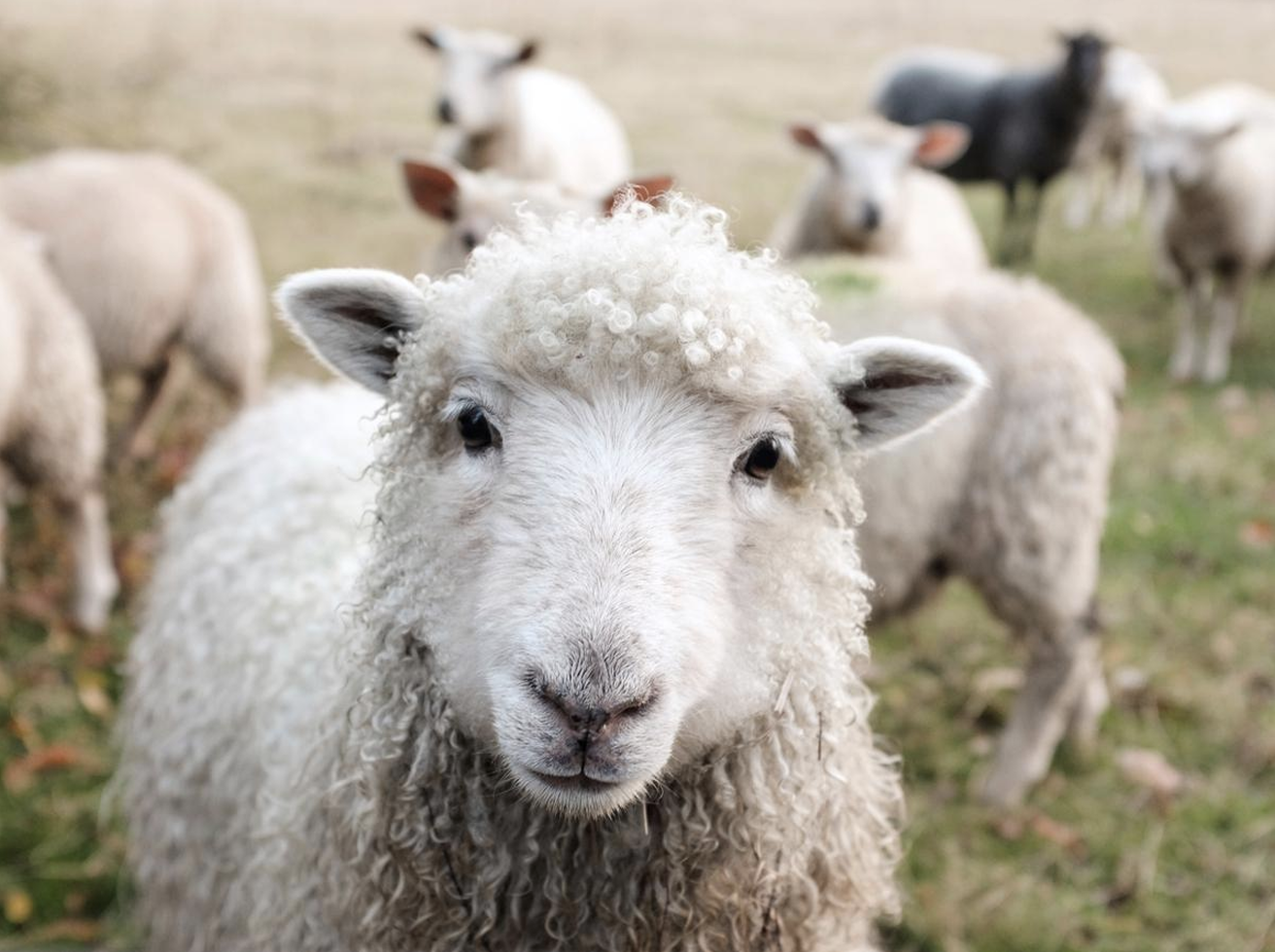
The gospel says that the good shepherd is willing to lay down their life for their sheep, in contrast to the wage worker who is only taking care of the sheep for a paycheck. The hired worker is not expected to give up their life for the sheep, says Jesus; the good shepherd will do it reflexively when the wolf comes.
If the only litmus test for being a good shepherd is sacrifice, Joe the Boston Terrier was a good shepherd. I know Joe would have given himself up for his family in a heartbeat. We probably had to restrain him from doing so on occasions.
But because our friend Jesus is not straightforward in his teachings, and always invites us into deeper consideration of his words, there is more than sacrifice that we need to consider about Jesus the good shepherd: It has to do with completeness.
In the Bible, seven is a significant number.
- There are seven days of creation in Genesis, with the seventh day being set aside as a sabbath day of rest.
- Joshua marches seven times around Jericho before the city walls come falling down.
- Seven seals and seven spirits in the Book of Revelation.
- Not just seven times, but seven times seventy is the number of times the gospel says we are to forgive others.
- Seven is a symbolic number that signifies completeness, the resolution of a full cycle of something.
And, so, it stands out that Jesus in John’s Gospel makes seven different “I am” statements to describe who he is to his friends and followers.
- He says, “I am the bread of life.”
- “I am the light of the world.”
- “. . . the door of the sheep.”
- “. . . the resurrection.”
- “. . . the way.”
- “. . . the true vine.”
- “and, of course, . . . I am the good shepherd.”
These seven “I am” statements give us a lot to think about when it comes to the nature of Jesus. Getting to know Jesus is the work of all Christians, because getting to know Jesus is a way of coming to know God, the creator and ground of our living.
Jesus points the way for us by telling us who he is. These seven characteristics speak to Jesus’s ability to connect the parts of the world around him — bread connects people around a table; the “way” connects our past to our future; and the vine connects the grapes to the nutrients in the ground. Jesus is the divine love holding us together, seeking completeness.
Some of my thinking about this came from when I lived in Boston: I used to help lead confirmation retreats for the high schoolers of this conference. The theme of the retreat was “Who Do You Say I Am?” and it was all about getting to know Jesus through his seven “I am” statements.1
Five times a year, young members of many UCC churches would gather out at a retreat center on the Cape; there was lots of singing, and learning, and games, and group building. The kids would produce and perform a Jesus skit that always amazed me. And we got to know about Jesus by hands-on projects and by asking questions like what does it mean when Jesus calls himself the good shepherd?
The answers to this question, as mentioned, typically fall into the categories of sacrifice and completeness — who is included in Jesus’s flock, and who is excluded.
This second piece is stranger than the straightforward concept of sacrifice. The scripture about who is part of the flock opens with the words, “at the time the Festival of the Dedication took place in Jerusalem, it was winter.” Another name for the Festival of the Dedication is Hanukkah — a holiday of national pride when Jews, led by the Maccabees, fended off an empire. Resisting the false hope of empire and its strength-through-domination is the backdrop of the good shepherd.
At Hanukkah, a group opposed to Jesus ask him if he is the one chosen by God to deliver the people from their oppression by Rome.
And his response is to say, “I have told you, and you do not believe. The works that I do in my Father’s name testify to me, but you do not believe because you do not belong to my sheep.”
Some in our world might say that, here, Jesus is explaining that his flock is a small one, only made up of a select chosen few: that his flock is just his family, and if he has additional time it could possibly include his neighbors, and if he can spare a little more effort, it could include his community, and if the Galileans and Judeans are taken care of it might include people of the Mediterranean, and beyond.
But, friends, everything we know about Jesus flies in the face of the idea that he would be a shepherd to a flock of hierarchies and rankings. The only preference that Jesus shows is for those who have found a way to receive the transformation of his love and grace into their lives — and everyone is invited to be a part of his grace.
This is why Jesus spoke and stayed and ate and argued and loved people with whom he disagreed — because the circle of divine love, to which Jesus is a way, is available for all: for you and me, poor and rich, liberal and conservative, anyone who is open to being transformed by Jesus can take part in this kingdom. We are connected by the divine love which is greater than us all.
Jesus himself came into this world as an act of divine love and transformation, as God chose to become a vulnerable human, to be carried in the womb of a teenage Mary, and to be born into the world to participate in all the joy and sorrow that is being human, even unto death.
Having been so human, having struggled so, having laughed and cried in human form, how could God not know that we all need a good shepherd?
Once we have been changed, we can hear him when he calls, and we come running into his keep — like Joe the Boston terrier running in through the back door and settling in for a nap by the window after a long day of loving and protecting his family. When we have been changed, “no one can snatch us out of his hand.”
Praise be to God, the Good Shepherd we have found.
We can hear him when he calls.
Amen.