Scripture: John 2:13-25
The letter began, “Hello Darling, today I find myself a long way from you and the children. I am at the State Prison in Reidsville which is about 230 miles from Atlanta.”1
It was October 1960 and Coretta Scott King was at home with two young children, reading this letter. She’s six months pregnant with a third child, and her husband is writing to let her know that he was moved from a local jail in Atlanta to a distant State Prison. Neither of them know when he’s going to be released. The last time they saw each other was in court a few days earlier when he had been sentenced on charges of trespassing for engaging in political advocacy.
As Coretta knew, as recorded in her biography called Desert Rose, everyone knew the stories of Black prisoners in Georgia like her husband being moved between jail cells at night and never seen or heard from again.2
The letter from Martin goes on: “I’m asking God hourly to give me the power of endurance. I have the faith to believe that the excessive suffering that is now coming to our family will serve to make Atlanta a better city, Georgia a better state, and America a better country. Just how I do not yet know, but I have to believe it will. If I am correct, then our suffering is not in vain.”
Will you pray with me … God of the new creation. God of mercy. God of the peacemakers. Use this your congregation as instruments of your kingdom vision as we seek to hear and live your Word. May the words of my mouth and the meditations of our hearts be acceptable in your site, our rock, our tower, and our redeemer. Amen.
On this Martin Luther King Junior Day Weekend 2026, we live in a different world that is also all too similar to the one where Coretta and Martin considered the meaning of their suffering as a family — and whether it would be part of a positive change for their city, state, and world.
Martin King believed and said again and again that “unearned suffering is redemptive” — meaning that when oppressed people choose to accept the forces that conspire against them in a nonviolent way, it becomes a transformative force for good, inspiring others to do likewise.3
In our own time, a 19-year-old college student flying home to Texas for Thanksgiving is detained in Boston and deported to Honduras before anyone knows where she is.
People are shuttled around the country from detention center to detention center.
Agents of the federal government act with limited accountability to intimidate and expel people, and in some cases shoot and kill the people who try to stand in their way.
In our own time, the Episcopal bishop of New Hampshire, Rob Hirschfeld, tells the clergy of his region to get their affairs in order, and to make their wills, and to prepare for a “new era of martyrdom” where faith leaders are asked to nonviolently put their bodies between vulnerable people and the “powers of this world.”4 This is our world, and perhaps not so different from the world of 1960, or of Jesus’s world.
The author Jack Hitt tells a story that can help us to connect Dr. King and Jesus to this question of the struggle and suffering that returns through the generations.5
He begins his story by remembering when his four year old daughter once asked him about the meaning of Christmas and the birth of Jesus. She was infatuated by the story and wanted to know everything about Jesus.
Hitt writes, “So we read a lot about [Jesus’s] birth and about his teaching, like “do unto others as you would have them do unto you.” And we would talk about those old words and what it all meant.
And then one day we were driving past a big church, and out front was an enormous crucifix. She said, who is that? And I guess I’d never really told her that part of the story. So I said, “yeah, well, that’s Jesus, and I forgot to tell you the ending. Well, he ran afoul of the Roman government. This message that he had was so radical and unnerving to the powerful people at the time that they had to kill him. They came to the conclusion that he would have to die. His message was too troublesome.”
And so it was about a month later after that Christmas, and her preschool had Martin Luther King Day off. So I also knocked off work that day, and I decided I’d take her out to lunch.
And we were sitting in there, and right on the table where we happened to plop down was the art section of the local newspaper, and there, big-as-life, was a huge drawing by a 10-year-old kid in the local schools of Martin Luther King. And she said, “who’s that?” And I said, “Well, as it happens, that’s Martin Luther King, and he’s why you’re not in school today. So we’re celebrating his birthday. This is the day we celebrate his life.”
And she said, “so who is he?” I said, “well, he was a preacher.” And she looks up at me and goes, “for Jesus?” And I said, “yeah, actually he was. But there was another thing that he was really famous for, which is that he had a message.”
And you’re trying to say all this to a four-year-old who is hearing this for the first time, so you’re just very careful about how you phrase everything. So I said, “well, yeah, he was a preacher and he had a message. And she said, “what was his message?” I said, “well, he said that you should treat everybody the same, no matter what they look like.”
She thought about that for a minute, and she said, “well, that’s what Jesus said.” I said, “yeah, I guess it is. I never thought of it that way, but yeah, that is sort of like “do unto others as you would have them do unto you.” And she thought for a minute and looked up at me and said, “did they kill him, too?”
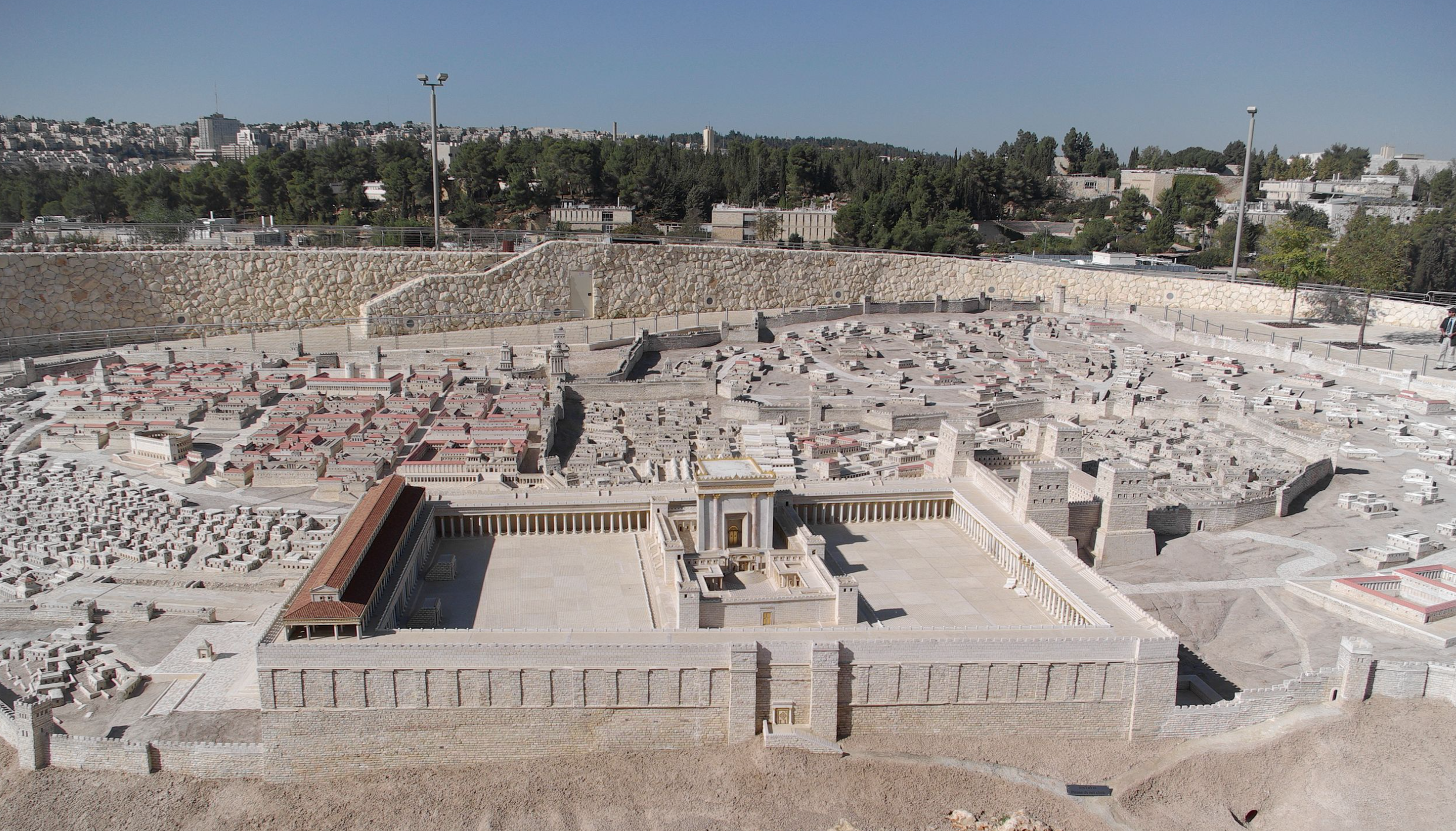
This cutting question from a four-year-old points us to the scripture reading of Jesus in the temple.
All of the four gospels tell this story of Jesus going into the temple with his message, and throwing out the merchants and money changers who were operating in this holy site.
The temple was the center of economic, political, and religious power. The people who were at the heart of these endeavors were rich and powerful — and their interests were not aligned with the interests of the majority of people.
In John’s gospel, this story of cleaning out the temple comes at the very beginning, right after the wedding at Cana in chapter two. In all the other gospels, this scene comes very late and is given as a reason why the religious authorities in Jerusalem decide to destroy Jesus. He is disrupting their sources of power. Jesus says, “stop turning my Father’s house into a marketplace.”
While writing this sermon on Jesus expelling merchants and goods from a holy site, I came across a Christian and democratic politician in Texas who is running for Senate whose campaign slogan is, “It’s Time to Start Flipping Tables.”6 James Talarico is gaining attention as a progressive Christian in a conservative state with a message of love and care for neighbor and doing unto others and extending hospitality and loving your enemies partially because so many of us in every part of the United States are craving the moral and ethical leadership of Dr. King, and looking for people who will stand up for human decency and kindness and defending the vulnerable and supporting the transformative power of love.
And this is also why every MLK Day I find myself gravitating toward Coretta Scott King, lifelong justice advocate in support of the Dream, and the Poor People’s Campaign, and opposition to apartheid, and antidiscrimination protections for LGBTQ people. She was the one who made everything possible for Martin Luther King — and we need more people who can make things possible today.
In the letter that I quoted from to open this sermon, Martin continued to write, “I understand that everybody here [in the prison] can have visitors this coming Sunday.” He then asked her if she could come with the children, and bring with her nine particular books he wanted, and copies of several of his past sermons, and a radio. And she delivered.
John Lewis said, “the historians will remember Coretta as one of the founding members of the new America.” I hope he is right. As we look to the model of Jesus in setting a new path forward for the temple of his time, we give thanks for the fragile legacy of Coretta Scott King in our own century of hoping for better.
May it be so. Amen.
- https://kinginstitute.stanford.edu/king-papers/documents/coretta-scott-king ↩︎
- https://www.uapress.ua.edu/9780817386122/desert-rose/ ↩︎
- https://kinginstitute.stanford.edu/king-papers/documents/suffering-and-faith ↩︎
- https://broadview.org/rob-hirschfeld-renee-good/ ↩︎
- https://www.thisamericanlife.org/188/kid-logic-2001 ↩︎
- https://www.holypost.com/post/james-talarico-flipping-tables-like-jesus-not-christian-nationalists ↩︎

