This week as I was thinking about the significance of our Scholarship Sunday, I was reflecting about the ministry of Rev. John Carnes, Newman Church’s sixth pastor. I wrote a little about him in this week’s online newsletter — this curious minister who was also a spy for George Washington.
As we honor the lives and celebrate the futures of the students among us today, Rev. John Carnes is an interesting person for us to remember and ponder, because as a seventeen-year-old boy in 1740, Carnes was swept away by the spirit of his time and made a huge decision about his college education that would shape his entire life, and, in a small way, shaped the founding of the United States.
1740 was a fascinating time to come of age in New England; the old political and religious structures were breaking down; a social order that had been set for a hundred years was cracking. And into the fissure stepped people who sought to pull the world in different directions.
There are parallels between 1740 and 2025.
In our world today, many norms that were developed after the World Wars are sputtering: things put in place to promote human flourishing like strong social welfare programs, robust unions, treaty organizations, and international peace organizations are weakening. The loss of these can feel existential because these norms, imperfect though they are, sought to maintain the conditions for peace. The additional undermining of education, civil rights, and citizenship protections feel like more wounds to our aspirations to protect poor, vulnerable, hungry, sick, and afflicted people.
It feels like a familiar world is breaking; John Carnes grew up in time like 2025.
And, like tens of thousands of other young people in the New England of the 1740s, John Carnes heard a popular British traveling minister named George Whitefield preach a sermon.
Whitefield preached in barns and fields because established leaders wouldn’t let him into established churches — Whitefield connected with people; he stirred their emotions, and empowered them by teaching them that they had control over their own salvation—their own destinies. In a dangerous time, John Carnes and others found unlikely comfort here.
After hearing the Whitefield sermon, Carnes decided to study religion, and he trained at Harvard to become a minister of the Gospel of Jesus Christ.
How many of us can trace a decision like what to study, or what passions to pursue, to seeing someone else doing something amazing and saying, “I want to go and do that”? That can be a very powerful force in our lives.
But John Carnes had a difficult first pastorate in Stoneham, Massachusetts where he was driven from of the congregation after publishing his complaints in the Boston Gazette.
Carnes comes to Newman Church and, for four years, struggles to connect with the congregation here too. In a volatile era, there was something keeping Carnes from being his best self in church leadership.
Friends, it’s never too late to change your life; it’s never too late to learn something new; it’s never too late to channel the spirit of your time.
John Carnes left Newman Church, and left ministry, to become a grocer in Boston in the decade before the American Revolution. In the summer of 1775, the “retired parson,” as he was called, was secretly sending letters to American generals about the movements of British soldiers in Boston. His secret work as a spy, for which he was paid by George Washington, was part of the American resistance. And during the war, Carnes was hired as a chaplain to a regiment in the Continental Army, a role for which he was well suited; it sounds like he finally found his unlikely calling.
Newman Church has a long history of supporting scholarship of all kinds; we prioritize helping people pursue their education goals because learning new things helps us to engage the world. In Luke’s Gospel, the last thing Jesus does for his friends is to “open their minds,” which feels like he is preparing them for education.
What does it mean to have our minds opened?
The Gospel says Jesus opens his friends’ minds so that they will understand what they have seen, and what they are supposed to do next.
They have seen their friend, Jesus—revealed to be a savor—killed by the Roman empire, and come back to life after dying. And now, they are asked by Jesus to travel the world healing and offering comfort and forgiveness in Jesus’s name.
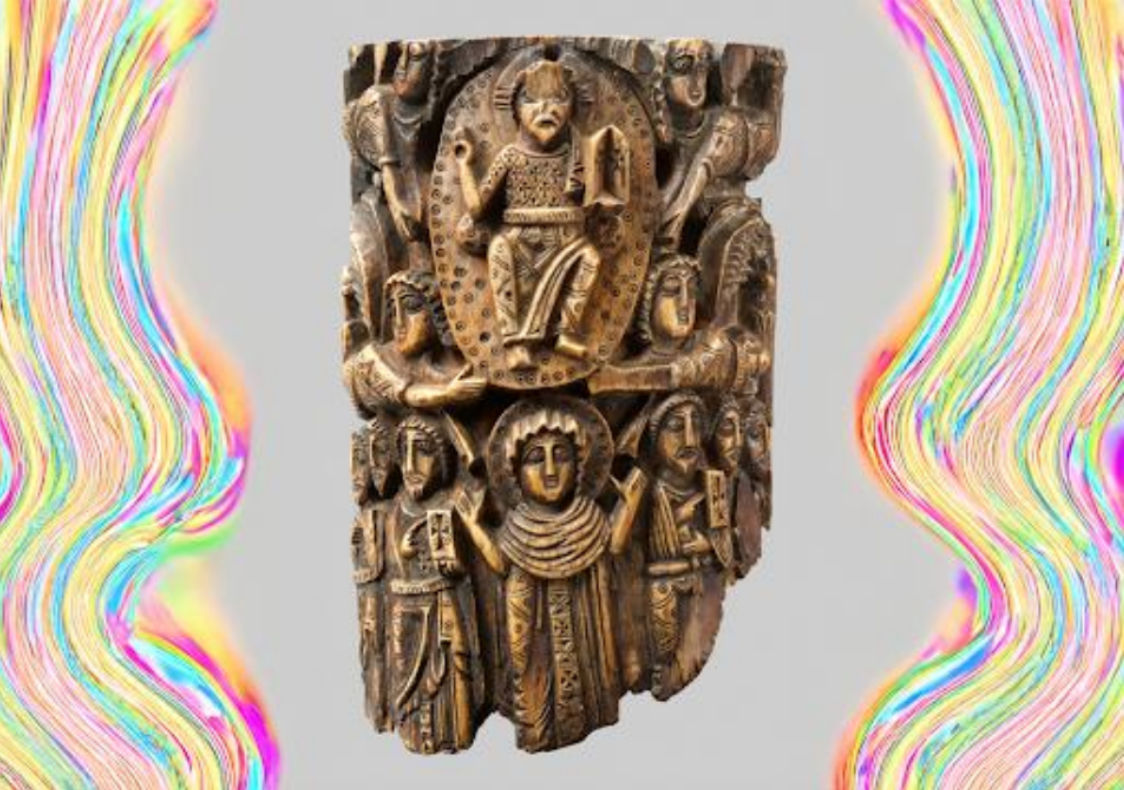
Today, Ascension Sunday, marks forty days since Easter—forty days that Jesus spent with his disciples before leaving them and ascending—rising—to heaven. Jesus teaches, and leaves them, again.
The divine presence will return to the disciples ten days later at Pentecost . . . In between Jesus’ departure and the Holy Spirit’s return, God may feel more distant from us. God may feel more distant from us right now.
In 1740, when John Carnes was a teenager, the world was on the precipice of a huge shift. An old world was going away; a new world was being forming.
In our world today, an old world is crumbling; something new is forming.
There is much that we are losing that is a great loss; but there is much that is okay to let go of: goodbye to a world where power is defined by how much you can extract from it; goodbye to a world of endless consumption and limited renewal.
The new-world-that-is-coming-but-is-not-yet-here is still undetermined; it is still being formed. Perhaps it will have more of what Jesus gave to his friends before he left them . . . when their old world crumbled: he gave them a new model for caring for one another; he gave them the power to forgive each other; he taught them how to teach others; he increased their capacity to listen and learn.
I hope our new world be full of these blessings.
It says in Luke’s Gospel that after Jesus ascended into heaven, his disciples returned to Jerusalem with joy.
To live in-between worlds is trust that God will help us cultivate joy. We have to become people who hold grief in one hand and hope in the other. Trust that God will help us; trust that God will open our minds to joy as we find our place in this world.
Look for ways to show a little extra love and care for others during this in-between week ahead. Jesus says, “the measure you give will be the measure you get back.”
To our students, and to all of us, what you learn is what you give back to the world.
May it be so. Amen.